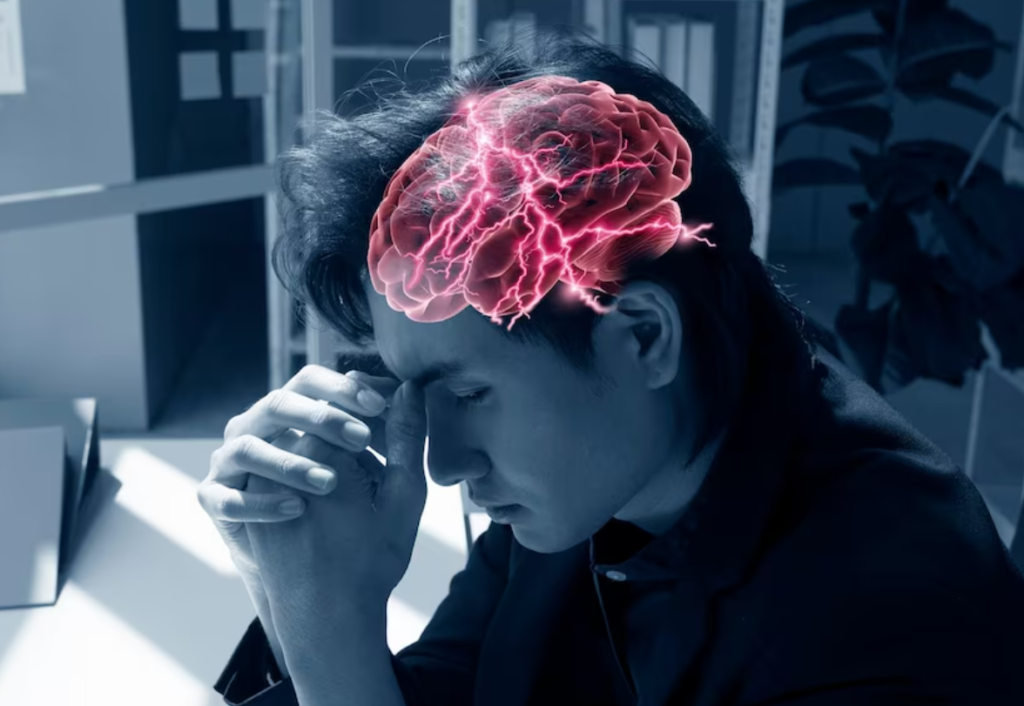
When you experience stress, your brain reacts almost instantly to protect you. This response is automatic and designed for survival, but when stress becomes constant, it can start to affect your health, emotions, and thinking.
The process begins in the amygdala, the part of the brain responsible for detecting threats. When it senses danger—real or perceived—it sends an alarm signal to the hypothalamus, which acts as a command center.
The hypothalamus activates the fight-or-flight response by stimulating the nervous system and releasing stress hormones. Your adrenal glands produce adrenaline, which increases heart rate, sharpens focus, and prepares the body for action. At the same time, cortisol is released to provide extra energy by increasing glucose in the bloodstream.
While this reaction is helpful in short bursts, problems arise when stress is long-lasting. Chronic stress keeps cortisol levels high, which can interfere with normal brain function. Over time, this can impair memory, reduce concentration, and increase anxiety.
The prefrontal cortex, the part of the brain responsible for decision-making and emotional control, becomes less active during stress. This is why people may act impulsively, struggle to focus, or feel overwhelmed when stressed.
Stress also affects the hippocampus, the brain region involved in learning and memory. Prolonged exposure to stress hormones can shrink this area, making it harder to form new memories or recall information.
Emotionally, stress heightens negative feelings and reduces emotional regulation. Small problems can feel much bigger, and emotional reactions may become stronger or harder to control.
The good news is that the brain is adaptable. Relaxation techniques like deep breathing, mindfulness, exercise, and adequate sleep help calm the stress response and restore balance. Social support and positive experiences also reduce the brain’s stress reaction.
In short, stress changes how your brain works—but with the right habits, you can train your brain to respond more calmly and recover more quickly.