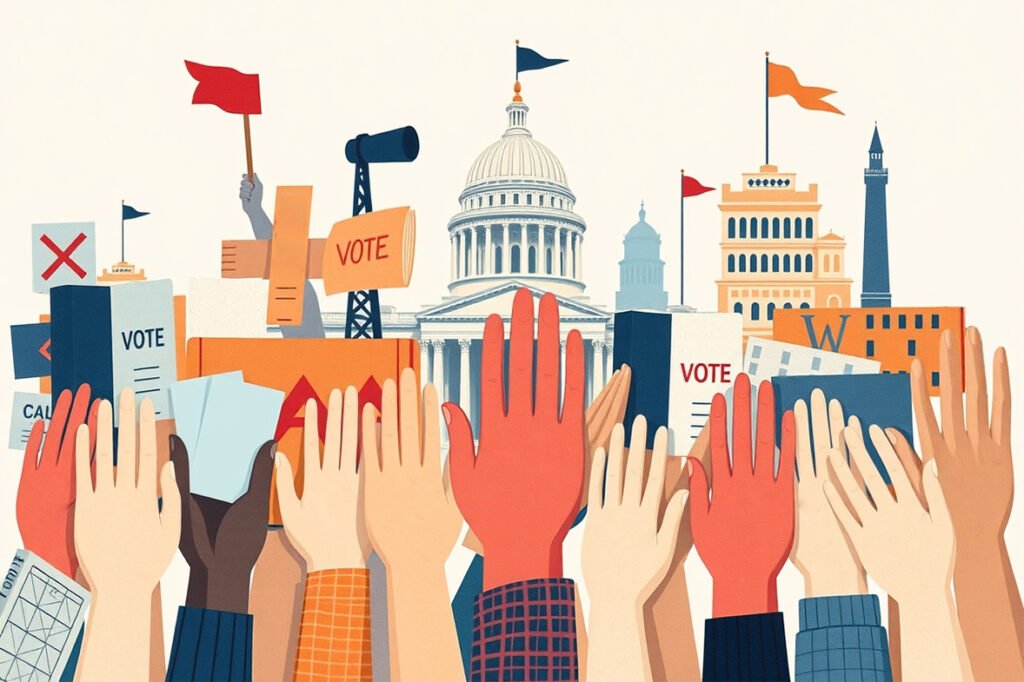
Modern democracy is often presented as the ultimate system of freedom and representation, yet beneath the surface there are uncomfortable truths that are rarely discussed. These hidden realities don’t mean democracy has failed—but they do reveal its limits and contradictions.
1. Voting does not equal full representation
Elections give citizens a voice, but once votes are cast, real decision-making is often concentrated in the hands of a few political and economic elites. Many policies are shaped long after elections, away from public influence.
2. Money has more influence than most voters
Campaign financing, lobbying, and corporate donations heavily affect political outcomes. While citizens have one vote each, wealthy interests can shape laws continuously through financial power.
3. Voter choice is often an illusion
Political options are usually limited to pre-selected candidates approved by party systems, media exposure, and funding networks. This restricts genuine choice and reinforces the status quo.
4. Media shapes democracy more than ballots
Public opinion is strongly influenced by media framing, repetition, and selective coverage. What people believe to be independent opinions are often guided by narratives they consume daily.
5. Emotional manipulation drives political behavior
Fear, identity, and anger are powerful tools in modern politics. Rational debate is frequently replaced by emotional messaging that mobilizes voters without solving problems.
6. Short election cycles discourage long-term thinking
Politicians focus on policies that bring quick popularity rather than long-term solutions. Issues like climate change, education reform, and economic inequality suffer because they don’t deliver immediate political rewards.
7. Democracy depends on informed citizens—but rewards distraction
While democracy requires an informed public, modern systems are filled with noise, misinformation, and entertainment that reduce attention and critical thinking.
8. Freedom exists, but within invisible boundaries
Citizens are free to speak and vote, yet economic pressure, social norms, and algorithmic control quietly shape what is acceptable, visible, or influential.
9. Participation is unequal
Those with more education, money, and time participate more actively in democratic processes, while marginalized groups are underrepresented despite formal equality.
10. Democracy survives on trust—but trust is declining
Institutions rely on public trust to function. When corruption, polarization, and broken promises accumulate, democratic legitimacy weakens from within.
These hidden truths don’t argue against democracy—they challenge us to see it clearly. Understanding its flaws is the first step toward improving it, protecting it, and making it truly serve the people it claims to represent.